

Global
Jamaat-e-Islami open to unity government ahead of Bangladesh polls
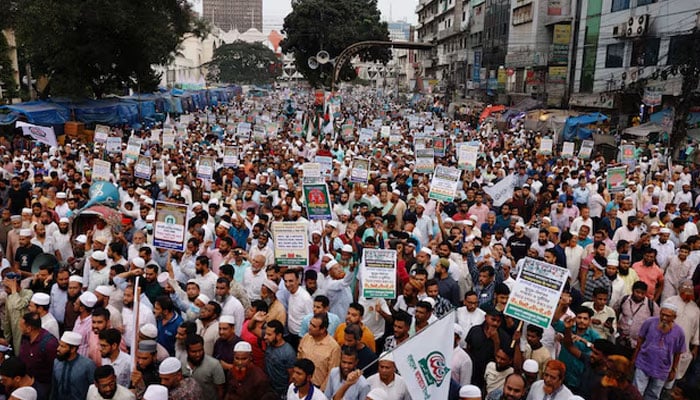
Dhaka: Jamaat-e-Islami, the once-banned Bangladeshi party, has said it is open to joining a unity government as it prepares for its strongest electoral performance in nearly 17 years in the February parliamentary elections.
The party’s chief, Shafiqur Rahman, said Jamaat-e-Islami has held talks with several political parties and is willing to work collectively to ensure stability in the country. Opinion polls suggest the party could finish a close second to the Bangladesh Nationalist Party in the February 12 vote, marking its return to mainstream politics in the predominantly Muslim country of 175 million people.
Jamaat-e-Islami last shared power between 2001 and 2006 as a junior coalition partner of the BNP and has indicated it is open to working with the party again. Rahman said the aim should be to ensure a stable government for at least five years. He added that if parties come together, they could jointly run the government.
He said an anti-corruption drive must be a shared priority for any unity government. According to him, the prime minister will come from the party that wins the most seats. If Jamaat-e-Islami emerges as the largest party, it will decide whether he himself would be a candidate.
The party’s resurgence follows the ouster of long-time prime minister Sheikh Hasina in a youth-led uprising in August 2024. Her Awami League party has since been barred from contesting the election. During her tenure, several Jamaat-e-Islami leaders were sentenced to death, and the party was banned from elections in 2013 after a court ruled its charter violated the country’s secular constitution.
Restrictions on the party were lifted in August 2024 by an interim government led by Nobel laureate Muhammad Yunus.
On foreign relations, Rahman said Sheikh Hasina’s continued stay in India after fleeing Dhaka remained a concern, as ties between Bangladesh and India have deteriorated sharply since her removal. He confirmed meeting an Indian diplomat earlier this year but said the request to keep the meeting confidential raised questions, stressing the need for openness in diplomatic engagement.
Addressing Jamaat-e-Islami’s historical ties with Pakistan, Rahman said the party believes in maintaining balanced relations with all countries and does not wish to lean towards any single state.
He also said any government that includes Jamaat-e-Islami would not be comfortable working with President Mohammed Shahabuddin, who was elected unopposed in 2023 with the backing of the Awami League. Shahabuddin has previously indicated a willingness to step down midway through his term.