

Pakistan
IHC halts CDA tree-cutting drive in Islamabad
The Islamabad High Court on Thursday put the Capital Development Authority’s ongoing tree-cutting drive on hold and sought detailed, clause-wise replies from the civic body and relevant authorities.
Justice Khadim Hussain Soomro issued notices to the CDA, the Pakistan Environmental Protection Agency and the Ministry of Climate Change and Environmental Coordination, directing them to submit comprehensive reports by February 2 on a petition filed by citizen Muhammad Naveed Ahmed.
The court’s intervention comes amid growing public debate and political concern over the removal of trees in the federal capital. The issue has also caused differences within the ruling coalition, with the Pakistan Peoples Party and the Muttahida Qaumi Movement-Pakistan voicing reservations over the scale of the operation.
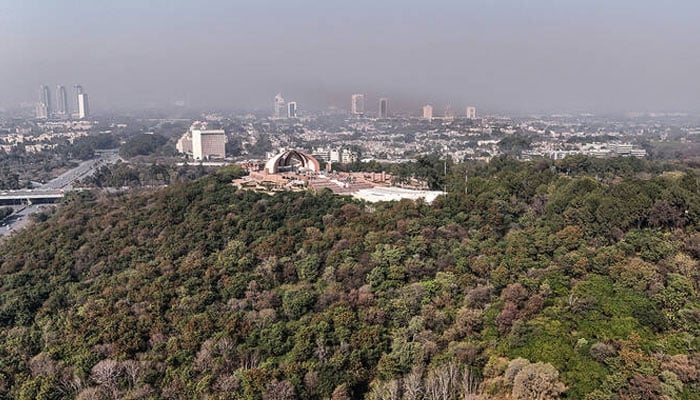
The Islamabad district administration has maintained that the campaign specifically targets paper mulberry trees, which officials say are responsible for severe seasonal pollen allergies affecting residents. According to the CDA, nearly 30,000 paper mulberry trees have been removed over the past year, including around 8,700 highly allergenic trees, as part of efforts to reduce pollen intensity in the city.
CDA officials have said that non-allergenic and indigenous species are being planted in place of the removed trees. Deputy Director General Environment Samina Pasha said replacement species include Amaltas, Jacaranda, Arjun and other suitable trees.
Earlier, Minister of State for Interior Talal Chaudhry told the National Assembly that only allergy-causing paper mulberry trees were being removed and that 60,000 new trees would be planted by the end of March, in addition to more than 40,000 mature trees already planted.
Federal Minister for Climate Change and Environmental Coordination Musadik Malik has also said that the CDA will plant three trees for every one cut and that additional plantation drives will be launched across Islamabad.
The tree removal initiative was launched in the last quarter of 2024 following a directive from the prime minister, who declared the pollen issue a priority public health concern. A detailed roadmap was finalised in a high-level meeting on November 27, 2024, tasking the CDA with systematically eradicating allergenic paper mulberry trees and submitting regular progress reports.
Read More: PTA warns against spread of illegal, hateful content on social media
According to officials, a scientific three-step process was adopted, involving cutting the trees, uprooting the entire root system and refilling the soil to prevent regrowth. In total, 29,115 paper mulberry trees were removed across major sectors and green belts, including large-scale operations in F-9 Park and Shakarparian, as well as urban sectors along Srinagar Highway.
Authorities have stressed that no indigenous or non-allergenic species were affected during the campaign and that restoration efforts are limited to areas where paper mulberry trees were removed. So far, around 40,000 indigenous and environment-friendly trees have been planted, with further plantation planned during the upcoming season.
The government has said the entire project, including replantation, will be completed by April 2026, adding that data from the Allergy Centre Islamabad shows a noticeable improvement in public health following the intervention.