

Pakistan
US-Iran talks in Islamabad end without deal after 21-hour marathon session
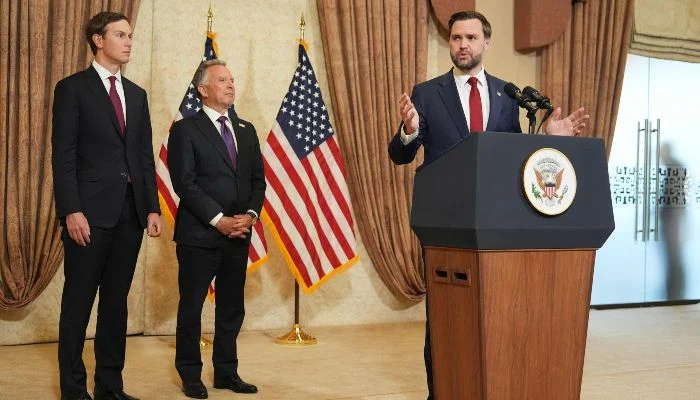
ISLAMABAD: Talks between the United States and Iran in Islamabad ended without an agreement after nearly 21 hours of intense negotiations, with US Vice President JD Vance saying the outcome represented a greater setback for Tehran than for Washington.
The Iranian side has yet to issue an official statement on the conclusion of the talks.
The US delegation, which included Jared Kushner and Special Envoy Steve Witkoff, departed Islamabad following the negotiations. They were seen off by Chief of Army Staff Field Marshal Syed Asim Munir and Deputy Prime Minister Ishaq Dar, with Interior Minister Mohsin Naqvi and US Chargé d’Affaires Natalie Baker also present.
Speaking at a press briefing in Islamabad, Vance thanked Prime Minister Shehbaz Sharif and Field Marshal Munir for Pakistan’s role in hosting and facilitating the high-level engagement, which had drawn global attention.
“We’ve been at it now for 21 hours,” Vance said, describing the discussions as serious but inconclusive. “The bad news is that we have not reached an agreement.”
He said both sides held “substantive discussions” but failed to bridge differences on core issues, particularly over Iran’s nuclear programme.
According to Vance, Washington’s central demand remains a firm and long-term commitment from Tehran not to pursue nuclear weapons or retain the capability to rapidly develop them. He stressed that the United States was not seeking temporary assurances but durable guarantees extending into the future.
Read More: FM Dar terms US-Iran talks ‘constructive’ despite no breakthrough
“We haven’t seen that yet,” he said, adding that while parts of Iran’s nuclear infrastructure had been damaged, the key issue was whether Tehran was willing to make a lasting political commitment.
Vance said the US negotiating team remained in constant contact with Donald Trump throughout the talks, reflecting the importance Washington attached to the diplomatic effort.
He added that the United States had presented what he described as its “final and best offer” to Iran, leaving the next move up to Tehran.
The outcome signals that while the Islamabad talks did not yield an immediate breakthrough, diplomatic channels remain open. However, it also underscores deep mistrust between the two sides, particularly on nuclear and security issues.
For Pakistan, the talks marked a significant diplomatic moment, reinforcing its role as a mediator. However, the lack of agreement highlights the complexity of the conflict and raises questions about whether positions will harden or if further negotiations can revive the peace process in the coming days.