

Pakistan
Bilawal urges clear mandate for PPP in Gilgit-Baltistan ahead of June 7 polls
GILGIT: Pakistan Peoples Party (PPP) Chairman Bilawal Bhutto Zardari on Thursday urged the people of Gilgit-Baltistan to give his party a clear mandate in the upcoming June 7 elections, saying it was necessary to ensure legislative and governance reforms for the region.
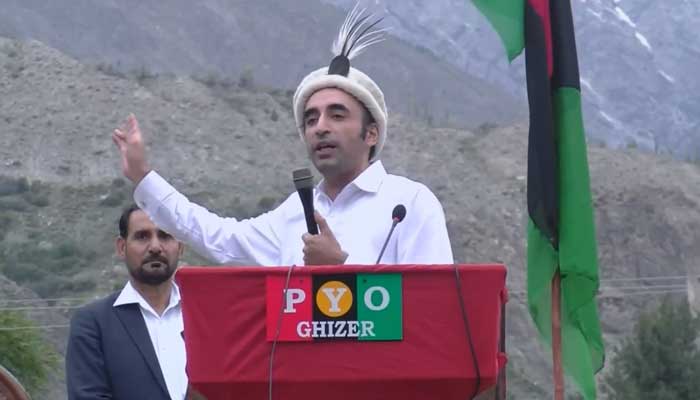
Addressing a public gathering in Ghizer as part of his election campaign, Bilawal said a strong mandate from Gilgit was essential so the party could take the region’s concerns to Islamabad.
He said the PPP needed electoral strength to ensure that the “voice of Gilgit” was heard before any discussion on creating a new province.
Bilawal said a PPP-led government in Gilgit-Baltistan was necessary to implement reforms related to land ownership rights for local residents.
He stated that only with a majority mandate would the party be able to introduce and pass legislation aimed at securing ownership rights for people in the region.
The PPP chairman also said that opposition parties, including PML-N and others, would not support or allow the passage of PPP-backed legislation in the current political environment.
He added that cultivable land in Gilgit-Baltistan was currently divisible and should instead be formally made available to local communities through legal reforms.
The region is scheduled to hold elections on June 7 for its fourth Legislative Assembly, with political parties intensifying campaigns across constituencies.
Read More: SC rejects Zahir Jaffer’s review plea in Noor Mukadam murder case
According to official figures, Gilgit-Baltistan has 963,034 registered voters, including 506,097 male and 456,937 female voters, reflecting a 29% increase since 2020.
Election data shows that the gender gap between male and female voters has narrowed to 4%, compared to 8% in 2020.
Despite the rise in registered voters, officials note that no new delimitation has taken place in the region since 1994, with an Election Commission source attributing the delay to the confidentiality of census data.