

Pakistan
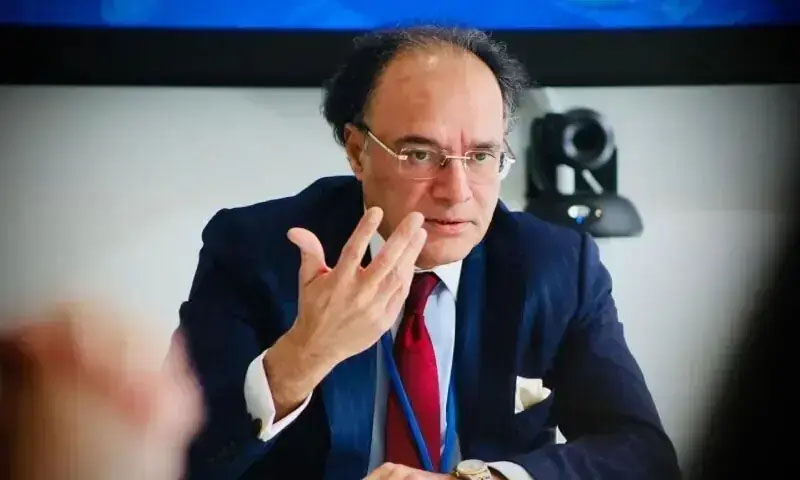
Pakistan economy grows 3.7% in FY2025-26 despite global challenges, says Aurangzeb
ISLAMABAD: Finance Minister Muhammad Aurangzeb on Thursday said Pakistan’s economy demonstrated resilience during fiscal year 2025-26 despite global trade uncertainty, devastating floods and regional geopolitical tensions, recording a growth rate of 3.7 per cent — the highest in four years.
Addressing a press conference after the launch of the Pakistan Economic Survey 2025-26, the finance minister said the growth reflected a broad-based economic recovery, although it remained slightly below the government’s earlier target of exceeding four per cent.
Aurangzeb said the fiscal year was marked by significant external pressures, including uncertainty arising from international tariff measures that contributed to a slowdown in global growth forecasts from 3.3 per cent in 2025 to 3.1 per cent in 2026. Pakistan also faced severe floods during August and September, while regional tensions from March onwards disrupted economic activity.
Despite these challenges, he said the country had successfully moved from economic stabilisation towards sustainable growth. He noted that Pakistan’s economy had recovered steadily from a contraction of 0.2 per cent in 2023 to growth rates of 2.6 per cent in 2024, 3.2 per cent in 2025 and 3.7 per cent in FY2025-26.
The finance minister said there had been broad expectations earlier in the year that growth would surpass four per cent, but developments in the Middle East and other external shocks affected economic momentum. Nevertheless, Pakistan’s economy expanded to its highest-ever nominal size of more than $452 billion, while per capita income increased to $1,901.
He added that the government was working to strengthen Pakistan’s competitive position in the United States market by the end of July and remained committed to maintaining macroeconomic stability while building resilience against future shocks.
Read More: Punjab launches 50,000 electric bike-sharing project in Lahore under green mobility plan
Aurangzeb said the recovery was visible across several sectors of the economy. Agriculture recorded growth of 1.14 per cent, while the livestock sector, which contributes nearly 60 per cent of agricultural output, also showed improvement.
Manufacturing posted its strongest performance in four years, with 16 out of 22 major sub-sectors registering growth. Increased demand for cement, mobile phones and other industrial products supported the expansion of industrial activity.
The services sector, which accounts for 58.1 per cent of the economy, continued to play a major role in supporting growth. The information and communication sector emerged as a key contributor, recording growth of 7.5 per cent during the fiscal year.
Highlighting macroeconomic improvements, Aurangzeb said Federal Board of Revenue tax collection increased by 10.1 per cent, while inflation continued its downward trend after reaching record highs of around 38 per cent in previous years.
He said the fiscal deficit had narrowed significantly and workers’ remittances remained strong, reaching $4.2 billion in the previous month. However, he stressed that Pakistan would need to further increase exports to ensure long-term external sector stability.
According to the finance minister, fiscal consolidation efforts resulted in a fiscal deficit of 0.7 per cent of GDP, while the primary surplus reached 3.2 per cent of GDP. The country’s debt-to-GDP ratio also declined to 68.5 per cent.
Aurangzeb said the number of registered companies had surpassed 300,000 and corporate profits had increased by more than 20 per cent, reflecting growing business confidence and economic activity.
He also highlighted Pakistan’s engagement with international capital markets, saying the country had successfully launched Sukuk bonds, Panda bonds and other financing instruments in both American and Chinese markets. He added that Chinese investors had shown strong confidence in Pakistan’s economic prospects.
Speaking on the occasion, Planning Minister Ahsan Iqbal stressed the need for long-term policy continuity to sustain economic growth. He said countries that followed a “test match” approach to development achieved lasting progress, while Pakistan often relied on short-term solutions.
Iqbal said frequent policy disruptions had hindered the country’s economic development and forced it to depend on support from friendly countries and international financial institutions, including the IMF. He emphasised that Pakistan should strive to end such dependence through sustained reforms and consistent economic policies.
The planning minister noted that Pakistan still imports agricultural inputs while countries such as Vietnam have attracted significantly higher levels of foreign direct investment. He said one of Pakistan’s biggest economic weaknesses had been the absence of continuity in policies, which had undermined long-term planning and growth.
He urged stakeholders to adopt a more balanced perspective when evaluating economic performance and to recognise achievements alongside challenges in order to build confidence and stability in the country’s economic direction.