

Pakistan
Pakistan voices concern over Iran-US tensions, vows continued role in regional peace efforts
ISLAMABAD: Pakistan on Thursday expressed concern over the escalating tensions between Iran and the United States, saying Islamabad would continue its constructive efforts to help reduce regional tensions.
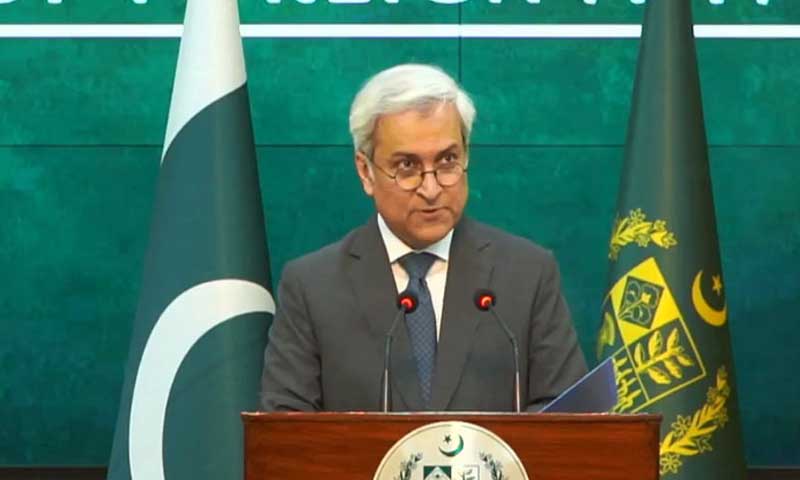
Foreign Office spokesperson Tahir Hussain Andrabi said Pakistan had moved beyond its recent silence on the issue and was closely monitoring the evolving situation.
“Contrary to our recent silence, Pakistan has expressed concern over the growing tension between Iran and the US. Pakistan will continue to play its positive role in this regard,” the spokesperson said during the weekly media briefing.
He said dialogue between the two sides was continuing, adding that developments in the Gulf region, the Strait of Hormuz and the Bab-el-Mandeb strait were a matter of concern.
“The Iran-US tension should not spread to other parts of the region,” Andrabi said, stressing the importance of diplomatic engagement to avoid further escalation.
The Foreign Office spokesperson also said Pakistan had taken note of Saudi Arabia’s statement regarding drone attacks launched from Iraq.
Responding to a question about Islamabad’s earlier silence on the attacks, Andrabi said Pakistan did not issue statements on every incident.
He added that Prime Minister Shehbaz Sharif had spoken with Saudi Crown Prince Mohammed bin Salman last week as part of diplomatic efforts amid the regional crisis. Deputy Prime Minister and Foreign Minister Ishaq Dar also held telephone conversations with his Saudi counterpart on July 25 and contacted Jordan’s foreign minister.
On other matters, the spokesperson rejected a recent documentary aired by DW TV regarding Pakistan’s nuclear programme, calling it baseless and far from facts.
Andrabi said Pakistan had complete confidence in its command and control system, adding that the country’s strategic policy was based on security and stability.
Talking about the Kashmir issue, the Foreign Office spokesperson condemned India’s move to provide legal cover to its actions in occupied Jammu and Kashmir.
He said Pakistan would continue raising the matter at international forums and reiterated concerns over the use of pellet guns in occupied Kashmir.
“Pakistan has always condemned the use of pellet guns,” he said, adding that the issue was also documented by the United Nations human rights office.
On bilateral matters with India, Andrabi said both countries had issued visas to each other’s diplomatic staff as part of routine procedures when personnel complete their assignments.
Read More: Arshad Nadeem qualifies for Commonwealth Games 2026 javelin final with season-best throw
He said the Islamabad Memorandum of Understanding and Pakistan-Qatar joint statement remained valid and could be referred to by both sides.
The spokesperson said Kuwait’s Foreign Minister had completed an official visit to Pakistan, during which discussions were held on strengthening bilateral relations.
He said Kuwait had ratified the defence agreement with Pakistan, adding that the June 2023 defence cooperation pact was now fully operational and would be further strengthened through joint exercises and military training.
Andrabi said Pakistan also maintained close defence relations with Jordan and Bahrain, while details regarding any future agreements would be shared after formal decisions.
The Foreign Office spokesperson said Deputy Prime Minister Ishaq Dar attended the Shanghai Cooperation Organisation’s Council of Foreign Ministers meeting in Kyrgyzstan, where he held meetings with several counterparts.
He added that Pakistan, along with foreign ministers of other Muslim countries, had condemned Israeli actions in Al-Quds and Palestine.
Regarding Afghanistan, Andrabi said militant groups including Tehreek-e-Taliban Pakistan operating from Afghan territory did not have formal structures such as uniforms or identification marks.
He said Pakistan faced difficulties in verifying information from Afghanistan due to the presence of multiple armed groups.
“It is not surprising for any armed group to take control of an area,” the spokesperson said, adding that Pakistan would continue raising security concerns through diplomatic channels.