

Global
Israel launches second phase of Iran war targeting underground missile sites
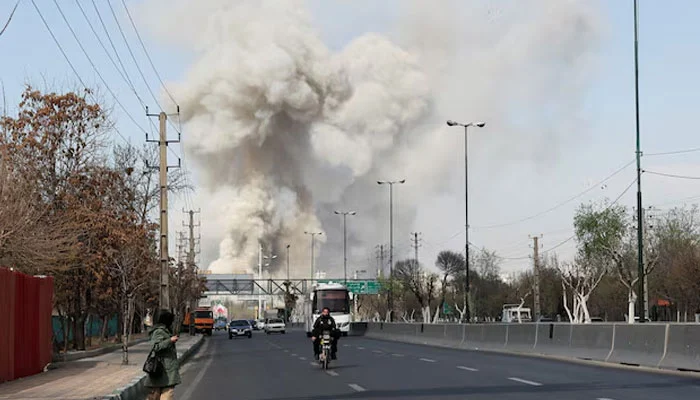
ISLAMABAD: Israel has entered the second phase of its war against Iran, focusing on destroying ballistic missile facilities buried deep underground, according to sources familiar with the military campaign.
The new phase comes as the joint air offensive by Israel and the United States nears the end of its first week, after initial strikes reportedly killed senior Iranian leaders and triggered a wider regional conflict.
The war has already led to retaliatory missile and drone attacks by Iran targeting locations in Israel, Gulf states and Iraq, while Israeli forces have also carried out strikes in Lebanon.
According to Israeli officials, the military has so far targeted hundreds of above-ground missile launchers capable of striking Israeli cities. The second phase of operations is expected to focus on underground bunkers believed to store ballistic missiles and related equipment.
Sources said Israel’s objective is to eliminate Iran’s capability to launch aerial attacks by the end of the conflict, while also weakening the leadership structure of the Islamic Republic.
In a statement on Thursday, the Israeli military said its air force had struck an underground facility used by the Iranian regime to store ballistic missiles and related infrastructure intended for attacks on aircraft.
The military had not previously confirmed attacks on underground missile storage sites since the beginning of the joint strikes last weekend.
Estimates of Iran’s missile arsenal vary widely. Israel’s military previously assessed Iran possessed about 2,500 missiles before the war, while other analysts estimate the number could be as high as 6,000.
Despite the sustained air campaign, Iran has continued missile attacks against Israel and other locations in the region.
Experts say the remaining size of Iran’s missile stockpile could play a decisive role in determining how the conflict evolves.
According to analysts, Iran may still possess land-attack cruise missiles capable of flying at low altitudes to evade radar detection.
Read More: Pakistan voices concern over India-Canada uranium supply agreement
Meanwhile, Israeli fighter jets have carried out near-constant sorties since the start of the war, increasing operations after the Iran-aligned Hezbollah launched rockets at Israel, prompting heavy Israeli airstrikes reaching as far as Beirut.
Sources familiar with the operations said some Israeli aircraft have struck targets in Tehran and western Iran during outbound missions before hitting Hezbollah positions in Lebanon while returning.
Israeli and US officials say missile and drone launches from Iran have declined since the beginning of the conflict, partly due to airstrikes on launch sites and related military infrastructure.
However, analysts believe Tehran may also be conserving its missile reserves in preparation for a prolonged war of attrition.
Former Israeli deputy national security adviser Eran Lerman said the initial expectation was that Iran’s ruling system would weaken quickly following the first wave of strikes.
“But this has yet to happen,” he said, adding that further pressure on Iran’s military and political structures could continue as the conflict intensifies.