

Global
US-Iran talks end without deal as global leaders push for continued diplomacy
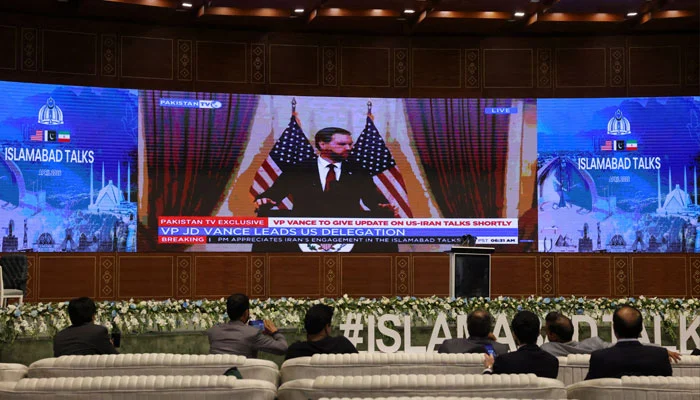
ISLAMABAD: High-stakes negotiations between the United States and Iran ended without a breakthrough on Sunday, though both sides refrained from immediate escalation, prompting global leaders to call for continued diplomacy.
JD Vance departed Islamabad after what marked the highest-level engagement between the two countries since 1979, stating that Washington had presented its “final and best offer” to Tehran.
“We leave here with a very simple proposal. We’ll see if the Iranians accept it,” Vance said, signalling that the next move now rests with Iran.
On the Iranian side, Mohammad Bagher Ghalibaf said his delegation had put forward “constructive initiatives” but accused the US of failing to build trust during the negotiations.
Officials from both sides indicated that key sticking points remained unresolved, particularly over control of the strategically vital Strait of Hormuz and whether Iran would retain the right to enrich uranium under any future agreement.
Despite the lack of a deal, there was no immediate return to hostilities, with a fragile ceasefire still holding following weeks of conflict that have destabilised the Middle East and disrupted global energy markets.
Pakistan, which hosted the talks and played a central mediating role, urged both sides to stay engaged. Ishaq Dar stressed that it was imperative to uphold the ceasefire and continue dialogue.
Read More: Lecturer arrested in Mirpurkhas student death case amid harassment allegations
“Pakistan has been and will continue to play its role to facilitate engagement and dialogue… in the days to come,” he said.
International reactions underscored broad support for diplomatic efforts. A spokesperson for the European Union described diplomacy as “essential” and praised Pakistan’s role in bringing the two sides together.
Meanwhile, Vladimir Putin told Iran’s Masoud Pezeshkian that Moscow was ready to help mediate and support efforts toward a “just and lasting peace” in the region.
In Europe, Wes Streeting acknowledged the disappointment over the lack of progress but stressed that diplomacy often requires persistence, while Penny Wong called for maintaining the ceasefire and returning to negotiations.
The talks in Islamabad were seen as a critical opportunity to de-escalate a conflict that has already claimed thousands of lives and shaken global markets. While no agreement was reached, officials and analysts say the continued engagement signals that diplomacy remains the preferred path forward.