


Health
Pakistan tightens border screening after Nipah virus cases reported in India
ISLAMABAD: Pakistan has imposed strict health screening measures at all entry points after two cases of the deadly Nipah virus were confirmed in India’s West Bengal, the Ministry of National Health Services, Regulations and Coordination said on Wednesday.
In a health advisory, the ministry directed that no individual will be allowed entry into the country without clearance from Border Health Services–Pakistan (BHS-P), citing the high fatality rate and outbreak potential of the virus.
The advisory said the decision was taken “in view of the recent regional alert regarding Nipah Virus (NiV), as reported through international and regional public health surveillance mechanisms, including the WHO South-East Asia Region Epidemiological Bulletin (January 2026).” It noted that suspected cases had been reported in West Bengal and highlighted the virus’s zoonotic nature, potential for human-to-human transmission, and a case fatality rate ranging from 40% to 70%.
To prevent cross-border transmission and ensure early detection, the ministry ordered enhanced surveillance at all points of entry, including international airports, seaports and land crossings.
“No individual is allowed entry into Pakistan without health clearance by Border Health Services–Pakistan,” the advisory stated.
Under the new instructions, 100% screening of all passengers, transit travellers, crew members, drivers, helpers and support staff has been made mandatory. Authorities will verify the country of origin and complete travel history of all travellers for the past 21 days, regardless of nationality.
Special focus will be placed on individuals arriving from or transiting through Nipah-affected or high-risk areas. Any false declarations will be documented and reported immediately.
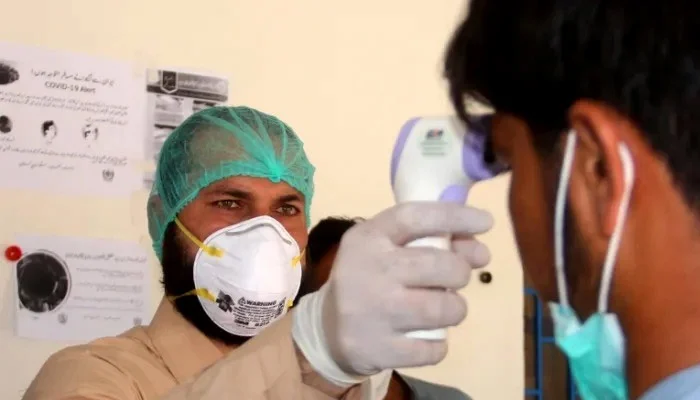
“All travellers will undergo thermal screening and clinical assessment at the point of entry,” the advisory said, adding that screening staff have been instructed to remain alert for symptoms such as fever, headache, respiratory issues and neurological signs including confusion or drowsiness.
According to the ministry, suspected cases will be isolated and managed under infection prevention and control (IPC) protocols and referred to designated isolation facilities or tertiary care hospitals. Conveyances and surrounding areas will be disinfected in line with approved standard operating procedures.
The ministry stressed strict compliance with IPC measures, including the use of personal protective equipment, hand hygiene and environmental sanitation, warning that any lapse would be treated as serious negligence.
It further said that daily reports from all points of entry would be recorded in the BHS-P system and shared with the National Command and Operation Centre (NCOC) and the National IHR Focal Point. The measures will remain in force until further notice.
Meanwhile, authorities in Singapore, Hong Kong, Thailand and Malaysia have also stepped up preventive measures, including airport temperature checks, to prevent the spread of the highly lethal and epidemic-prone virus beyond India.
Read More: LHC orders trial court to decide Ali Zafar–Meesha Shafi defamation case within 30 days
What is Nipah virus?
Nipah is a rare viral infection that primarily spreads from infected animals — mainly fruit bats — to humans. While some cases can be asymptomatic, the virus is often severe and potentially fatal. The World Health Organisation says the case fatality rate ranges between 40% and 75%, depending on the capacity of local healthcare systems.
Although Nipah can spread from person to person, experts say it does not transmit easily, and outbreaks are usually small and relatively contained. No approved vaccine or specific treatment is currently available, though candidate vaccines are under development.
How common is it?
Nipah was first identified in Malaysia in 1999. Since then, small outbreaks have been reported almost every year, mainly in Bangladesh, with sporadic cases in India. According to the Coalition for Epidemic Preparedness Innovations, around 750 cases have been recorded globally to date, resulting in 415 deaths.