

Pakistan
National Dialogue Committee Urges Top Leadership to Initiate Talks with Opposition
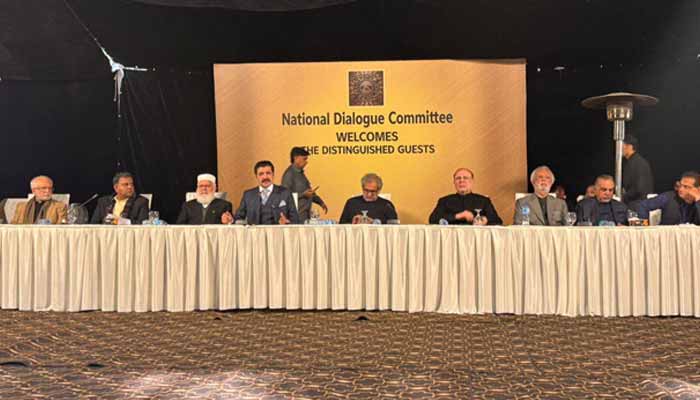
ISLAMABAD: A national conference convened by the National Dialogue Committee (NDC) has urged the country’s top leadership to take the lead in initiating a structured political dialogue with the opposition to reduce political tensions and stabilise Pakistan’s democratic and economic landscape.
The call was made during a representative national gathering held in Islamabad on Wednesday, attended by leaders of major political parties, intellectuals, journalists, lawyers and other stakeholders linked to Pakistan’s political and democratic system.
The National Dialogue Committee was recently formed by former Pakistan Tehreek-e-Insaf leaders, including Fawad Chaudhry, former Sindh governor Imran Ismail and Mahmood Moulvi. The group has been advocating reconciliation to cool political temperatures, particularly between the establishment and the PTI.
Unlike earlier initiatives focused on PTI founder Imran Khan’s incarceration in Adiala Jail, the committee’s immediate emphasis is on Kot Lakhpat Jail, where several senior PTI leaders, including Shah Mahmood Qureshi, Mian Mahmoodur Rashid, Ejaz Chaudhry, Umar Cheema and Dr Yasmin Rashid, are currently imprisoned.
In a joint declaration issued after the meeting, participants expressed serious concern over political instability, economic hardships faced by the public, restrictions on political activity and the media, and the ongoing threat of terrorism. They stressed the need for national unity, political reconciliation and confidence-building measures, while appreciating the NDC’s role as a bridge between the government and the opposition.
The declaration called for the formation of separate negotiation committees by the government and the opposition to formally begin talks. It proposed that President Asif Ali Zardari, PML-N President Nawaz Sharif and Prime Minister Shehbaz Sharif represent the government side, while the opposition’s negotiation committee would be announced by the NDC in consultation with senior opposition leaders currently in jail.
The participants also demanded the lifting of restrictions on political activities, immediate appointment of leaders of the opposition in both the National Assembly and the Senate, and the assurance of political freedoms within the constitutional framework. They further called for the release of women political workers, including Bushra Bibi and Yasmin Rashid, withdrawal of cases against political activists, an end to media censorship and removal of curbs on television anchors.
The declaration urged both sides to refrain from using the armed forces for political purposes or engaging in negative propaganda against state institutions. The meeting paid tribute to the sacrifices of Pakistan’s armed forces, police, Rangers and other security personnel in the fight against terrorism, offering prayers for the martyrs and patience for their families.
Read More: Pakistan Announces Enhanced Security for Chinese citizens
Addressing the conference, former prime minister Shahid Khaqan Abbasi said all stakeholders shared responsibility for the country’s deteriorating situation, adding that no individual or institution was free from blame. He stressed that media freedom and the rule of law were essential for economic stability and warned that chaos undermined state functioning.
PTI leader Sher Afzal Marwat said dialogue was the only sustainable way forward, citing the need to understand national security beyond confrontation. He said talks should focus on systemic reforms rather than being limited to the release of specific individuals.
Former Sindh governor Imran Ismail said the national dialogue process had now taken a formal shape, adding that Pakistan’s political situation was abnormal and required collective efforts to steer the country towards development.
The participants agreed to continue engagement at the national level, reiterating that the National Dialogue Committee would persist in its efforts in the broader national and public interest.