

Pakistan
Tree cutting sparks anger in Islamabad as residents fear loss of green city vision
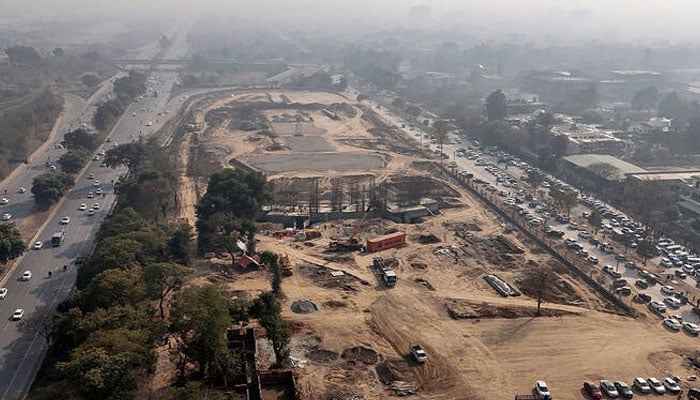
ISLAMABAD: Pakistan’s capital Islamabad, once known for its lush greenery and carefully planned parks, is facing growing anger over widespread tree felling linked to infrastructure development.
Built in the 1960s as a green city with wide avenues and tree-lined sectors, Islamabad’s landscape is increasingly being transformed as concrete replaces natural spaces, worrying many residents.
Muhammad Naveed has taken authorities to court over what he described as “large-scale tree cutting” for development projects, accusing officials of felling mature trees and leaving land barren.
The World Wide Fund for Nature (WWF) has blamed major infrastructure expansion, including road construction and monuments, for the mass removal of trees and vegetation in the capital.
Data from Global Forest Watch shows Islamabad lost 14 hectares of tree cover between 2001 and 2024 — an area roughly equal to 20 football pitches — though the figure does not include any gains in tree cover during the same period.
Local residents say the city is rapidly losing its identity. “They are cutting trees everywhere. It is not the same anymore,” said Kamran Abbasi, a trader who has lived in Islamabad since the 1980s. “Trees are life. Thousands are cut to build one bridge.”
Read More: Pakistan plans special force, stronger intelligence to secure Balochistan borders and mining areas
Environmentalists also warn that the decline in greenery is contributing to worsening air quality. Islamabad recorded no good air quality days last month, with nearly all days classified as “unhealthy” or “very unhealthy” by monitoring organisation IQAir.
WWF officials stressed that forests and trees play a key role in filtering polluted air, absorbing harmful gases and cooling urban environments.
Authorities, however, argue that some tree removal is necessary to tackle severe seasonal pollen allergies, which are especially acute in spring. The issue is largely linked to paper mulberry trees planted extensively during the city’s early development.
Abdul Razzaq, an official of the Capital Development Authority (CDA), said pollen allergies cause serious health problems such as asthma and chest infections, prompting plans to remove around 29,000 pollen-producing trees and plants.
Critics argue that allergies are being used as an excuse for broader tree-cutting driven by development. Experts say the solution lies in careful urban planning, replanting with non-allergenic species, and greater transparency over infrastructure projects to protect Islamabad’s green character.