

Global
US says Iran’s supreme leader alive and increasingly active amid stalled peace talks
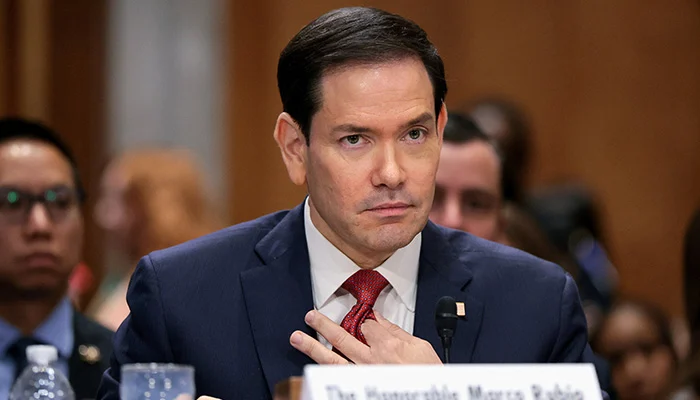
WASHINGTON: US Secretary of State Marco Rubio said on Tuesday that Iran’s Supreme Leader Mojtaba Khamenei is alive and becoming increasingly active, despite reports that he was wounded during US-Israeli attacks and has not appeared in public since assuming office.
Speaking before the Senate Foreign Relations Committee, Rubio said there were signs that Khamenei was engaging more actively in state affairs.
“I think there are indications out there that he is increasingly engaging at some level,” Rubio told lawmakers.
Mojtaba Khamenei, 56, succeeded his father, Ali Khamenei, who was reportedly killed during the first wave of US-Israeli strikes that marked the beginning of the conflict on February 28.
Rubio’s remarks came as efforts to end the three-month-long war remained deadlocked. The conflict has spread across the Middle East and contributed to a global energy crisis.
The US secretary of state expressed hope that a diplomatic breakthrough could still be achieved, but stressed that Iran would have to make significant concessions regarding its nuclear programme before sanctions could be lifted.
Read More: EU praises Pakistan’s role in US-Iran mediation, calls it “Major Regional Power”
“There is the prospect before us, which could happen today, it could happen tomorrow, it could happen next week,” Rubio said.
He said Iran must also agree to reopen the Strait of Hormuz, a critical shipping route for global oil and gas supplies.
Rubio said Tehran should clearly announce that the waterway is open and that ships would no longer face restrictions or tolls. He added that Iran must refrain from attacking vessels and cooperate in removing mines from the area.
The top US diplomat further said that Iran would need to negotiate severe and long-term limitations, or a complete cancellation, of its uranium enrichment activities.
Rubio maintained that international sanctions were linked to Iran’s nuclear programme and highly enriched uranium stockpiles.
He said sanctions relief would become possible if Tehran agreed to abandon those activities and comply with future agreements aimed at preventing nuclear proliferation.