

Pakistan
JI announces nationwide sit-ins on August 16 over fuel prices, petroleum levy
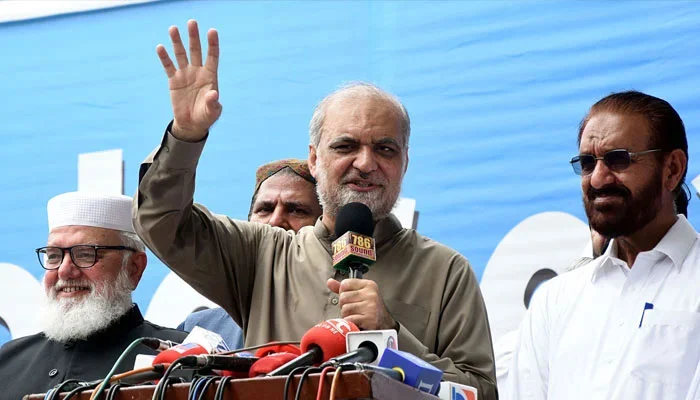
PESHAWAR: Jamaat-e-Islami (JI) Emir Hafiz Naeemur Rehman on Sunday announced simultaneous sit-ins across all four provinces on August 16 against higher fuel prices and the petroleum development levy, accusing the government of using the levy to conceal corruption.
Addressing a press conference in Peshawar, Hafiz Naeem said petrol should cost around Rs225 per litre and criticised the government for failing to reduce fuel prices despite the end of the recent regional conflict.
He said global oil prices had increased during the US-Iran conflict and disruptions in the Strait of Hormuz, through which a significant portion of global oil shipments passes.
The JI chief alleged that the government had generated substantial revenue through the petroleum development levy and claimed the mechanism was being used to conceal corruption.
Announcing the next phase of the party’s protest campaign, Hafiz Naeem said simultaneous sit-ins would be held outside the Chief Minister House in Punjab and the Governor Houses in Sindh, Balochistan and Khyber Pakhtunkhwa on August 16.
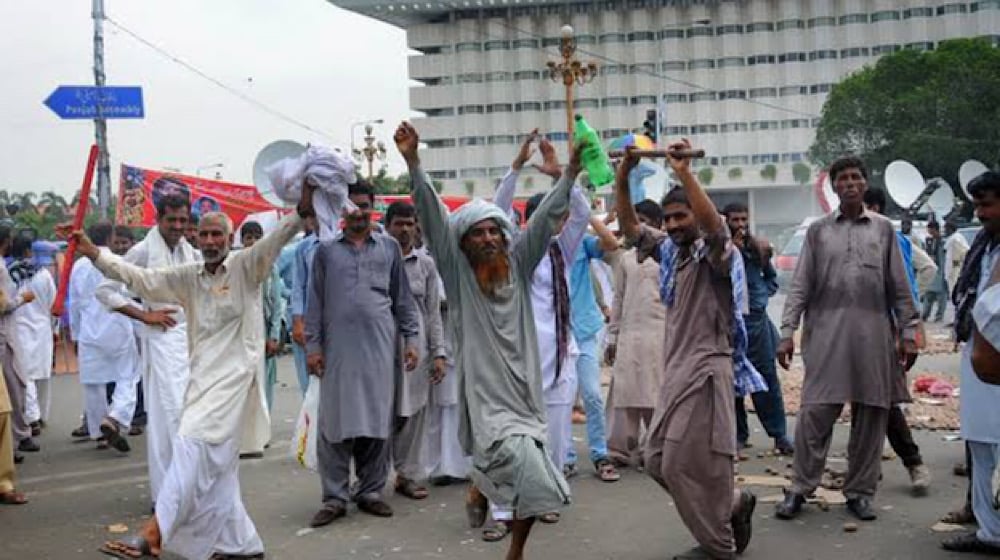
He defended the demonstrations, saying public protests had traditionally been held on roads, and urged citizens to participate. He also called on other political parties to support the movement.
Hafiz Naeem alleged that corruption worth Rs1.3 trillion was taking place within the Federal Board of Revenue (FBR), claiming that taxes were being collected from people who had no income.
Read More: Pakistan secures gold, two silver medals at International Nuclear Science Olympiad
He criticised political parties for remaining largely silent on the issue and described the JI’s August 7 demonstrations as historic. He said emergency services, including ambulances, were not obstructed during the protests.
Earlier on Friday, the JI had staged nationwide demonstrations against inflation, rising fuel prices, the petroleum development levy and higher taxes. The protests included sit-ins and road blockades at hundreds of locations across Pakistan, including provincial capitals and major cities.
The party subsequently announced that it would intensify the campaign and move into another phase of demonstrations to increase pressure on the federal government.
Hafiz Naeem said the objective of the campaign was to force the authorities to provide relief to citizens struggling with the rising cost of living, particularly high petroleum prices.
Welcoming the Makkah Joint Defence Agreement signed by Pakistan, Saudi Arabia and Turkiye, the JI emir described the pact as an important development for the Muslim world and expressed hope that additional countries, including Iran, would eventually join the arrangement.
Pakistan, Saudi Arabia and Turkiye signed the agreement on Friday, establishing a collective security framework under which an armed attack against any one of the three countries would be regarded as an attack against all.
Hafiz Naeem said the defence pact should evolve into a stronger network of cooperation among Islamic countries.
Responding to Interior Minister Mohsin Naqvi’s remarks about the “collapse” of the country’s governance system, the JI chief said an acknowledgement of failure should be followed by a comprehensive review of the existing system.
He noted that the Constitution already provided a mechanism for increasing administrative units and warned that any move outside the constitutional framework could create doubts and controversy.
Commenting on political alliances, Hafiz Naeem said JI remained in contact with the Tehreek-e-Tahafuz Ayeen-e-Pakistan (TTAP), an alliance of opposition parties, but acknowledged that political alliances had not produced positive results in the past.
He said political parties should continue their protests independently while maintaining collective positions on issues affecting the public.