

Pakistan
Pakistan successfully conducts training fire of indigenously developed Fatah-4 missile
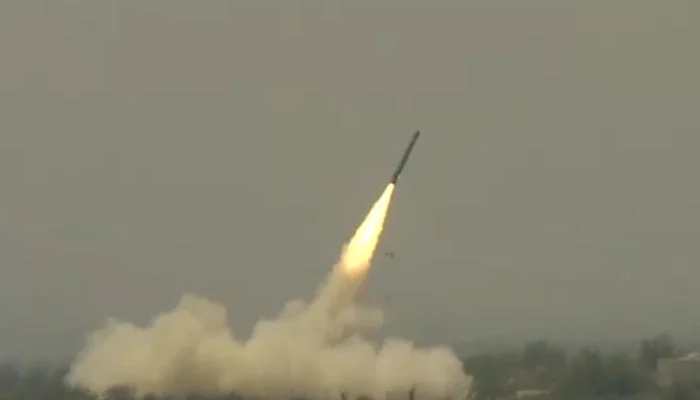
RAWALPINDI: Pakistan on Thursday conducted a successful training fire of the indigenously developed Fatah-4 ground-launched cruise missile, according to the military’s media wing.
In a statement, the Inter-Services Public Relations said the training launch was carried out by the Army Rocket Force Command to enhance the operational efficiency of troops and validate the technical parameters of various upgraded sub-systems aimed at improving accuracy and survivability.
The military’s media wing said the missile system was equipped with advanced avionics and state-of-the-art navigational aids, enabling it to engage long-range targets with high precision.
“Equipped with advanced avionics and state-of-the-art navigational aids, the weapon system is capable of engaging long-range targets with high precision,” the statement said.
Asif Ali Zardari, Shehbaz Sharif and the services chiefs congratulated the armed forces and scientists involved in the successful training fire of Fatah-4.
The top civil and military leadership appreciated the technical expertise, dedication and commitment of all personnel who contributed to the successful launch of the F-series missile system.
The latest test comes around two weeks after the Army Rocket Force Command successfully conducted a training launch of the indigenously developed Fateh-II missile system.
According to an earlier ISPR statement issued on April 28, the Fateh-II launch was witnessed by senior officers from the Strategic Plans Division, Army Rocket Force Command and Pakistan Army, along with scientists and engineers from strategic organisations.
Read More: Aleema Khan moves IHC against alleged solitary confinement of Imran Khan
A week before that, the Pakistan Navy had also carried out a successful live firing of the Taimoor air-launched cruise missile, an indigenous anti-ship weapon system.
The ISPR had then stated that the missile executed its mission with exceptional precision and validated the navy’s combat capability to detect, target and neutralise enemy sea-based threats at extended ranges.